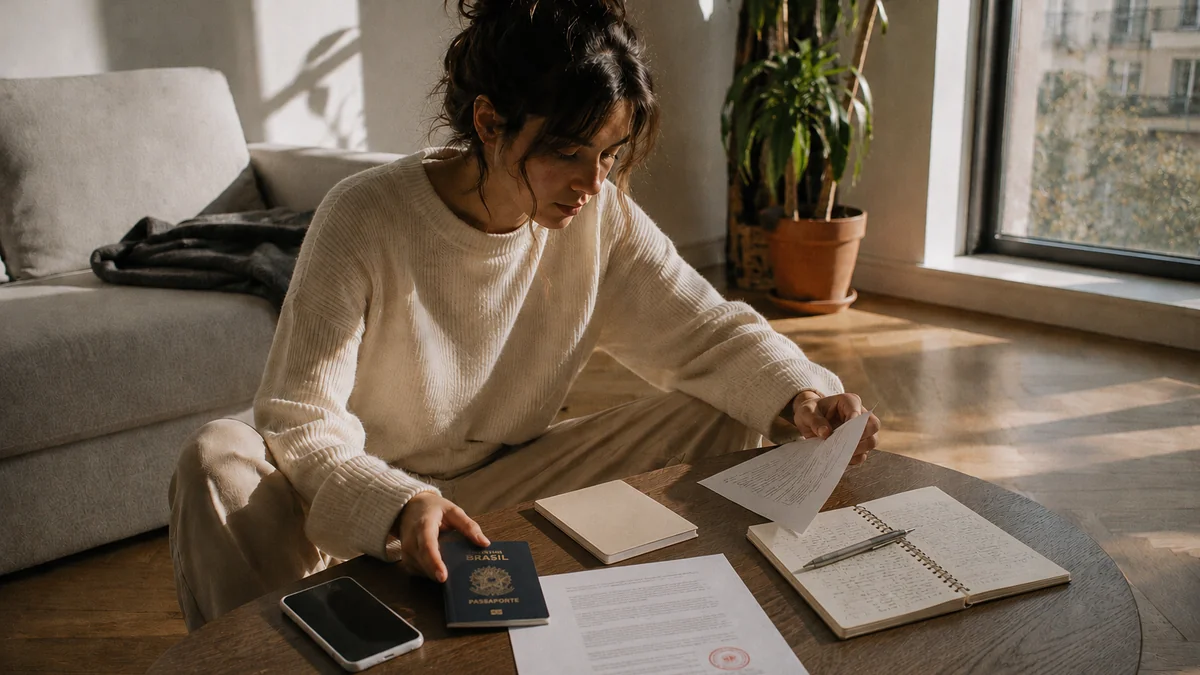
Modeling in South Korea has become more bureaucratic and more selective than most candidates expect. Anyone who wants to work in Seoul has to get three things right before buying a plane ticket: the right visa, the kind of agency that actually hires foreigners, and what the market really pays.
What changed in Korean modeling in 2026
Two things got heavier: the paperwork and the filter.
The Korean work visa runs through a chain of checks: the embassy verifies that the model is real, that the home agency is real and that the sponsoring Korean agency is real. Candidates whose papers line up along that chain move fast. It's no longer enough to send your book and board.
On the demand side, Korean e-commerce and content volume pushed the commercial market up. More work, yes. But the selection didn't loosen. A serious agency in Seoul wants finished material and a track record, not a raw face.
The result is a market with work for people who arrive with documents and material ready, and a hard one for those who show up improvising.
Visa requirements change. Always check with the embassy or consulate of the destination country for current information.
E-6-1 or C-4: which visa your job calls for
The visa decides everything. Pick the wrong one and the whole trip stalls.
For a season of up to 90 days, the most common route is the C-4, short-term employment. For models and entertainment there is a sub-code, the C-4-5, with a stay of up to 90 days. It fits a short season with a local agency, and it's the type we used in a recent case of ours.
Longer stays fall under the E-6-1, the arts and entertainment visa that covers fashion models, granted for longer periods. Its paperwork is heavier: a Korean sponsor registered as a popular culture business, an activity plan and proof of professionalism, such as work contracts and a portfolio. Depending on the type of work and the embassy, the list can include a recommendation letter from a Korean body. The destination agency decides the right fit together with the embassy.
One point that doesn't forgive: a C visa can't change status after you enter Korea. The right type has to be chosen once, before you board.
The detail that sinks good candidates: tourists don't work. Entering on a tourist visa and booking a job in Korea is the direct route to deportation and an entry ban. The official rules and document list are on the Korean immigration portal (HiKorea), and they change often, so check before every application.
Which Korean agencies hire foreign models
Not every agency in Seoul signs a new face from abroad. You want the ones with an international board and a history of placing foreigners in work, not the ones that sign just to sign.
The market has names with that structure built over years: agencies that work with international models in commercial, catalog, runway and campaign, and keep relationships with agencies around the world. That's the profile that matters: people who already know how to receive a foreigner, handle the visa and generate real jobs.
The safest way to reach them is rarely a direct, cold contact. It's through a mother agency that already knows the Korean market, knows which board fits your profile and negotiates the contract before you board.
What the market pays and how the money gets home
Korea is not a European luxury runway. What runs in volume there is commercial and e-commerce: catalog, beauty, brand campaigns, content. It's steady work, not magazine glamour.
Pay varies a lot by job, brand and contract. Some deals close by the day, others as a monthly guarantee with commission on top. What changes your pocket in the end isn't only the negotiated amount, it's how much you lose getting the money home. Bad exchange rates and international transfer fees eat a slice nobody tells you about up front.
Paid in won and need to bring it home without losing on the exchange? Many models use Wise to receive international payments at the real market rate, instead of letting the bank keep the difference.
Before you romanticize the day rate, understand the whole package. How much an international model really earns explains where the money disappears between the contract and the bank account.
Percentages and amounts vary by contract and market. These are indicative examples.
The paperwork that fails candidates before the trip
This is where most people get stuck. It's not the face, it's the documents.
As a rule, the Korean agency sponsors the visa and does the heavy part: it fills out the form and the online step (e-Form) and sends the finished package, with an invitation letter, a letter of guarantee, the company registration and the visa contract. That contract is usually a paper for the embassy and can differ from the real commercial deal, so understand the difference before you sign.
The mother agency supplies the document that proves who the model is on this side, the Qualification Document, when applicable. The model handles a passport with comfortable validity, a comp card whose details match the passport and the contract, and checking the pre-filled form field by field. Then they sign and go to the in-person appointment at the embassy or consulate in the country where they live.
That check is serious. Inconsistent information on the form can lead to visa revocation and an entry ban, and a checkbox that contradicts the table right below it already counts as inconsistent. That's why the agency's package gets a second read before the appointment.
It's the same principle as any serious Asian season. Anyone who has seen up close how a first season in China works knows: document prep starts weeks before the flight, not in the embassy line. Korea follows the same logic, with its own paperwork.
An incomplete file isn't a detail. It's one of the most common reasons a good candidate loses the window and the whole season.
Inside Cosmos
When Cosmos evaluates an Asian season for a model on the roster, the face is the easy part. The real work comes before.
Our process generally includes reading the destination agency's contract line by line, checking that agency's real reputation in the market, and lining up the visa paperwork early, when applicable. Korea, China, India: each market has its own paperwork and its own pace, and we help prepare ahead of time instead of chasing it afterward.
The goal is simple. The model lands in Seoul with the visa sorted, the contract understood and expectations calibrated to the market as it is, not to the fantasy.
Ready for Korea?
Korea rewards those who arrive prepared and is hard on those who improvise. The right visa, the right agency and the right documents separate the season that pays from the trip that turns into a loss.
If you want to enter the international market with a mother agency beside you, the first step is for us to get to know you.
Want to be discovered by Cosmos? Send your material through Be Discovered. That's where we get to know you and judge whether an international season makes sense for your profile.
Frequently asked questions
Not to start. Commercial and runway work runs on simple instructions, and the agency usually helps with language on set. But basic English goes a long way day to day and in your relationship with the agency.
No. Working on a tourist visa is illegal and the risk is real: deportation and a ban on returning to Korea. Working requires a work visa: generally the C-4 for a season of up to 90 days and the E-6-1 for longer stays.
It depends on the sponsoring agency, the visa type and the embassy or consulate where you apply. That's why document prep starts weeks before the planned departure date, never at the last minute. Confirm the current timeline with the Korean consulate in your country.
Not necessarily. For a short season on the C-4, the portfolio usually serves as proof of professionalism. The E-6-1 asks for sturdier proof, such as work contracts and agency material. Either way, it's worth building the package carefully, alongside someone who has been through the process.