Model polaroids aren't pretty photos. They're the X-ray an international agency uses to see you as you are, with no filter and no production.
Almost every aspiring model gets her first polaroids wrong. Not for lack of looks. For too much production.
She works on the light, works on the pose, picks her best outfit, asks for help with makeup. And sends the agency exactly what the agency didn't ask for.
Here you'll see what model polaroids really are, how to take yours at home and which mistakes sink a good application before the first conversation.
What model polaroids really are
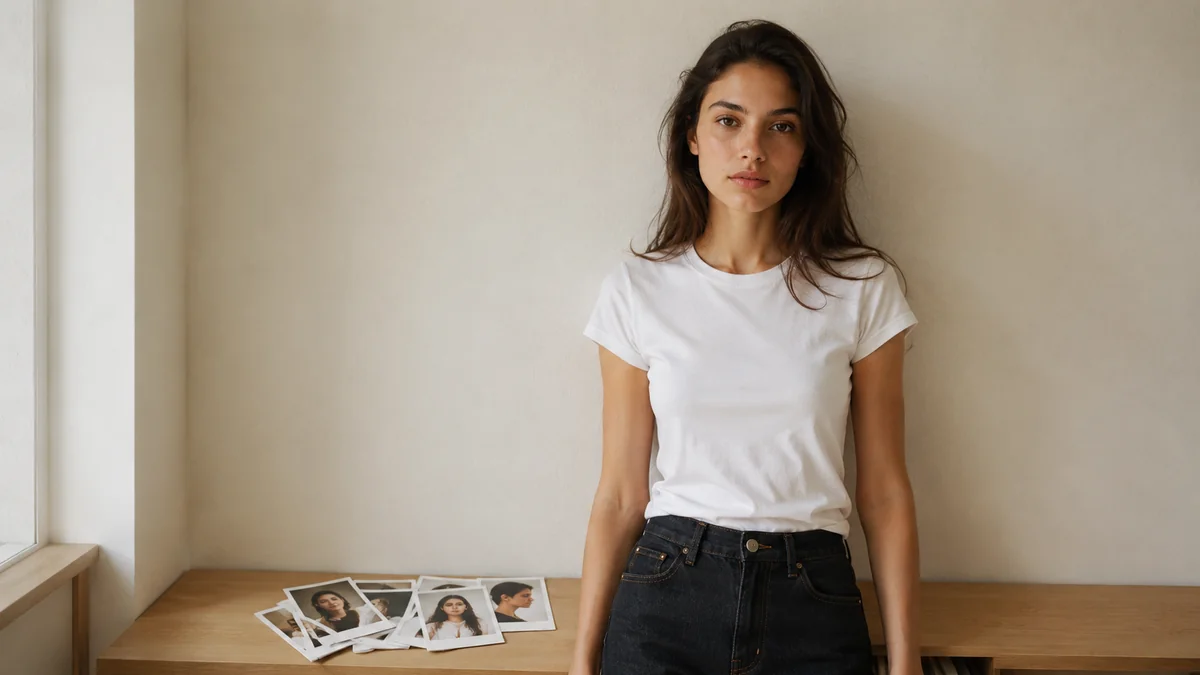
In fashion vocabulary, a polaroid isn't the instant film shot from a vintage camera. The term was inherited. Today it means a raw photo: no heavy makeup, no editing, no elaborate pose, no studio.
The job is simple and strict. Polaroids show the real structure of the face and body. Skin, proportions, height, symmetry, posture. It's the raw material before any work begins.
A mother agency looks at polaroids to answer one question: what can we build from here?
Think of it this way. The polaroid is the raw voice, no studio mic and no editing. The final photo is the produced track, the one you hear on the radio, on TV. The producer listens to the voice first. Everything else gets built and finished later.
The mistake of treating polaroids like pretty photos
The most common mistake is treating polaroids like a photoshoot. The model works on them, edits them, smooths the skin, picks the angle that hides things. And thinks she's helping.
She's getting in her own way. When polaroids come in over-produced, the agency can't read the material. And material that can't be read gets thrown out.
There's another side. If a polaroid hides something, the agency finds out at the first in-person casting. Then it feels like you tried to fool them. Starting an international relationship like that is the worst start possible.
Honest polaroids protect you. Made-up polaroids get in the way.
How to take polaroids at home with just a phone
You don't need a photographer. You need light, a plain background and someone to take the photo.
Natural light, always. Face a window at a time of soft light, morning or late afternoon. No flash. No ceiling light. Direct, strong sun doesn't work either.
A plain, light wall behind you, white if possible. No frames, no furniture, no clutter.
Phone at the chest height of whoever is shooting, lens straight, no tilting. Enough distance to fit your whole body. Vertical photo.
Whoever takes the photo stays still and steady. No creative angles. Here the camera is a measuring tool.
Clothes, hair and makeup: as little as possible
Fitted, basic clothes. For women, a top and shorts, or skinny jeans and a tank top. For men, a tank top or fitted T-shirt and trousers. The clothes need to leave the shape of your body visible. Loose clothes hide exactly what the agency wants to see.
Hair down, natural, pulled back from the face. No fancy flat-ironing, no hairstyle. The agency wants to see the line of your face.
Zero makeup. Clean skin. If you have a pimple, you have a pimple, and that sinks no one. What sinks you is trying to hide it.
Barefoot or neutral shoes. Clean nails. No accessories.
The minimum polaroid kit
A good result usually comes with the kit below:
- Face from the front, neutral expression, looking at the camera.
- Face in profile, both sides.
- Full body from the front.
- Full body from the back.
- Full body from the side.
- One natural smile, showing your teeth.
- Hands visible in at least one photo.
Seven to ten photos do the job. More than that becomes noise. The agency wants clarity, not volume. International photographers who write about the subject, like the British John Sansom, repeat the same rule: the rawer, the better.
The mistakes that kill a model application
Some mistakes show up every day in any mother agency's inbox:
- An old editorial photo sent instead of a polaroid.
- An app filter, even a light one.
- Yellow light from a lamp.
- A messy background.
- Loose or busy printed clothes.
- A crop that hides half the body.
- Full makeup.
- An Instagram pose instead of a neutral one.
Each one looks small. Put two or three together and your application goes in the bin.
When to update your polaroids
Polaroids have an expiry date. Hair changes, weight changes, age changes, and the agency needs the now, not last year.
The practical rule: update every three to four months, or whenever something changes visibly. You cut your hair, gained or lost measurements, changed your hair color. New photos.
Old polaroids lead to frustrating meetings. The agency books you expecting one thing and finds another.
Inside Cosmos: what we look for in a polaroid
When polaroids reach Cosmos, the first thing we do isn't judge beauty. It's judge readability. Does the photo show the structure? Can we understand the proportions? Does the skin show as it is?
A lot of good models have reached us with material that let us see nothing. And a lot of good conversations only happened because the polaroids were honest enough for us to see the path.
We would take a raw, well-shot polaroid over an expensive, produced shoot every time. The shoot shows what a photographer managed to do. The polaroid shows what we'll be working with.
The next step is taking yours
Good polaroids cost no money. They cost ten minutes of natural light and the nerve not to edit anything.
If you're putting your application together now, keep the polaroids separate from the portfolio. They're different things, with different jobs. And if editing your Instagram photos still holds you back, Cosmos Presets help you keep a clean standard without overdoing it.
When your polaroids are ready, send them to us. The Cosmos scouting form is the direct way in. Polaroid-style photos, real measurements and a short line about yourself. We read them, reply and tell you honestly what we see.
Frequently asked questions
No. A phone with good natural light does the job. What matters is a raw, well-framed photo, not the equipment.
No. Polaroids exist to show your real skin. Makeup hides exactly what the agency needs to see.
Between seven and ten. Face from the front and in profile, full body from the front, back and side, one natural smile and your hands visible.
Polaroids show your real structure, with no production. Portfolio photos show what you deliver once you're styled and shot. The agency wants both, at different moments.
Every three to four months, or whenever your hair, weight or measurements change visibly.